The Antikythera Mechanism: The 2,000-Year-Old Computer
A Discovery from the Deep
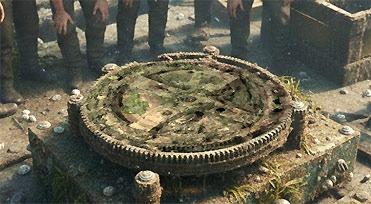
We turn our gaze now to the year 1901, off the coast of a tiny Greek island named Antikythera. Divers, searching for sponges, stumbled upon the skeletal remains of a Roman shipwreck. Amidst the marble statues and jars of wine lay a corroded, green lump of bronze that the world ignored for decades. Yet, as we peered inside using modern X-ray tomography, we discovered something that should not exist. A complex system of over thirty interlocking bronze gears—a device that predates similar clockwork technology by over a thousand years.
↑ Image credits: "Antikythera Mechanism" by Logg Tandy is licensed under CC BY 4.0.

Precision Engineering and the Lunar Anomaly
The Antikythera Mechanism was not a mere toy; it was an extraordinary analog computer. By turning a hand crank, the ancient Greeks could track the movements of the sun, the phases of the moon, and the positions of the five known planets with terrifying precision. It even featured a dial to predict eclipses—solar and lunar—down to the very hour.
Perhaps most astonishing was its ability to calculate the Lunar Anomaly. Because the moon follows an elliptical orbit, it appears to move at different speeds across the sky depending on its distance from Earth. To replicate this, the ancient engineers used a "pin-and-slot" mechanism—a differential gear system that allowed one gear to accelerate and decelerate another. This level of mathematical modeling rendered in physical bronze is a testament to a level of Hellenistic engineering we are only beginning to truly comprehend.
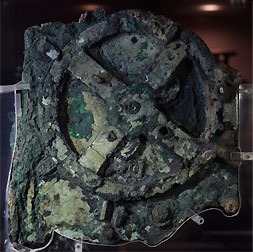
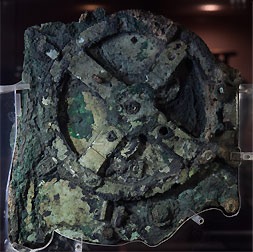
On the reverse of the device, researchers found a large dial representing the Metonic Cycle—a period of 19 years that nearly perfectly synchronizes the solar year and the lunar month. This allowed the user to determine exactly when the Panhellenic games, including the ancient Olympics, would occur.
This required a mastery of Archaeoastronomy, the study of how ancient civilizations understood the heavens. The mechanism served as a bridge between the divine and the terrestrial, a tool that proved the universe followed predictable, mechanical laws. It suggests that the Greeks were on the verge of a scientific revolution that was tragically cut short.
Following the Roman conquest, this level of mechanical sophistication vanished from the historical record. The world would have to wait until the 14th century for the first cathedral clocks to reach a similar level of complexity. It raises a haunting question: how much further might human civilization have progressed if this technology had not been lost to the tides of history? We are looking at a "tech-reset" that lasted a millennium, a silent reminder of how fragile human progress can be.
Synchronizing the Cosmos: The Metonic Cycle
The Lost Knowledge of the Heavens
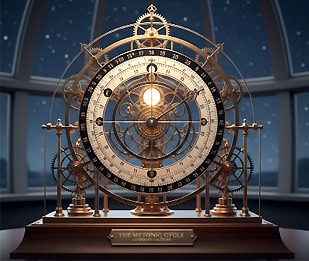
Think you could have built the world’s first computer?
The Antikythera Mechanism wasn't just a gear-box; it was a masterpiece of physics and calculation. Put your own gears to the test 👇