
The Immortal Jellyfish: Can Science Unravel the Secrets of Eternal Life?
The Enigma of Turritopsis dohrnii
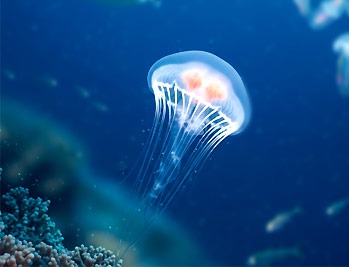
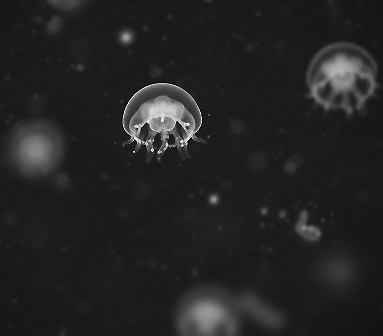
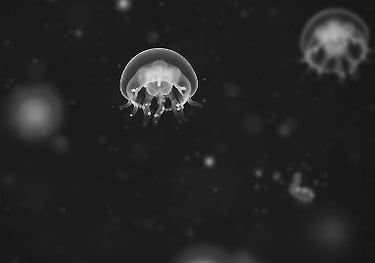
Welcome to a journey into the seemingly impossible. For millennia, humanity has dreamt of transcending its finite existence, of finding a way to cheat the relentless march of time. Yet, in the silent, shimmering depths of our oceans, a creature no larger than your fingernail has quietly achieved what we can only ponder: a form of biological immortality. This is the story of Turritopsis dohrnii, a member of the Cnidarian family—a group of ancient, stinging-celled aquatic animals that includes corals and sea anemones.
A Life Cycle in Reverse: Transdifferentiation Revealed
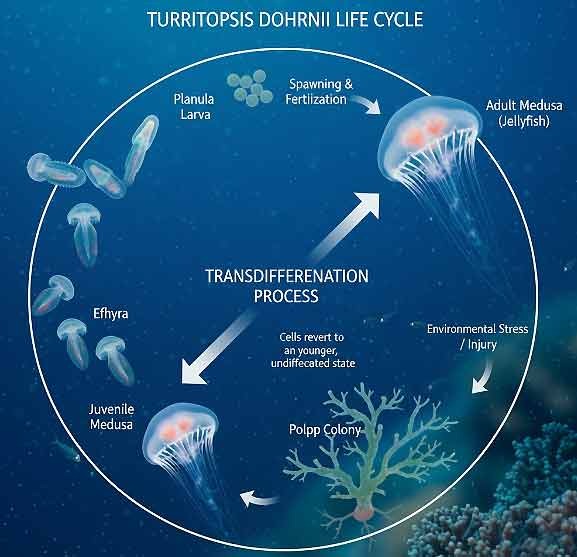
Our understanding of life's trajectory usually follows a linear path: birth, growth, reproduction, and ultimately, senescence—the inevitable decline of cellular function leading to death. However, Turritopsis dohrnii defies this fundamental rule. When faced with environmental stress or injury, this remarkable organism undergoes a process known as transdifferentiation.
Imagine a fully formed butterfly, instead of dying, choosing to revert back into a caterpillar. This is precisely what the immortal jellyfish achieves. Its specialized somatic cells—the cells that form the structural body—lose their specific identity and are repurposed into entirely new cell types. This process of cellular plasticity effectively hits a "reset button," returning the adult medusa to its juvenile polyp stage to begin life anew.
The scientific community is captivated by the jelly's ability to maintain its telomeres. These are the protective protein caps found at the ends of our chromosomes, much like the plastic tips on shoelaces. In humans, telomeres shorten every time a cell divides; once they vanish, the cell can no longer function and dies.
Yet, if we were to apply these biological secrets to ourselves, we encounter a profound psychological barrier: the limit of the human mind. Our brains are not infinite vessels; they are shaped by experience and memory. Should a human live for centuries, a disturbing question arises: how does one relate to their "self" from 200 years ago?
The sheer weight of two centuries of trauma, joy, and data might exceed our neural capacity, leading to a fragmented consciousness. To truly survive such vast spans of time, it might become necessary to periodically wipe the mental slate clean. In doing so, we would not be achieving continuous life, but rather a form of man-made reincarnation. We would be the same biological vessel, but an entirely new person—a fresh consciousness born into an old, immortal body.
For now, Turritopsis dohrnii remains a humble inhabitant of our global oceans, a living paradox silently performing its extraordinary trick. It reminds us that nature, in its infinite wisdom, holds secrets far more astonishing than our most ambitious fiction. As we gaze into the deep, we are forced to wonder: is immortality a gift to be pursued, or is the beauty of life found precisely in its fleeting nature?
The Genetic Blueprint of Immortality
Ethical Horizons: The Memory Paradox
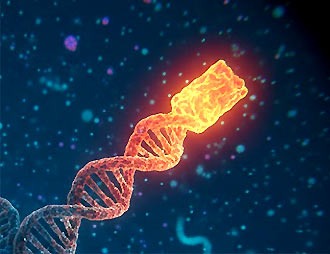
However, Turritopsis appears to possess a mastery over telomere restoration, preventing the chromosomal fraying that leads to aging. Researchers are meticulously studying this genetic mastery, searching for the unique sequences involved in DNA repair and the suppression of apoptosis, or programmed cell death. By deciphering this machinery, we might one day unlock breakthroughs in human regenerative medicine.
Think you know your stuff? See how you stack up with these quizzes 👇


